Wisdom Teeth Removal for Teens, Young Adults, and Families
Wisdom teeth can cause pain, swelling, and other oral health concerns when they do not have enough room to develop properly. The Center for Oral & Facial Surgery provides personalized wisdom teeth removal for patients in Katy, Fulshear, and Richmond, TX.
WHY WISDOM TOOTH REMOVAL IS A MILESTONE FOR TEENS & YOUNG ADULTS
Wisdom teeth can develop without causing symptoms at first, but pain, swelling, tenderness, or difficulty opening your mouth may signal a problem. An evaluation can help determine whether your wisdom teeth are impacted, affecting nearby teeth, or likely to cause problems as they continue to develop.
The average adult has 32 teeth by age 18, including 16 on the top and 16 on the bottom. Each tooth has a specific name and function. The teeth at the front of the mouth (incisors, canines, and bicuspid teeth) are used for grasping and biting food into smaller pieces, while the back teeth, or molar teeth, are used to grind food into a consistency suitable for swallowing.
However, the average mouth is made to hold only 28 teeth. It can be painful when 32 teeth try to fit into a space for 28. These four additional teeth are your Third Molars, or “wisdom teeth.”
WHY SHOULD I HAVE MY WISDOM TEETH REMOVED?
Nine out of every ten people have or will have at least one problematic wisdom tooth that requires removal. For example, by the time a wisdom tooth has become impacted (e.g., pressing against the next molar as it is erupting through the gum) and you feel the pain, it may already be causing issues like damage to adjacent teeth or infection.
Your oral surgeon can evaluate your wisdom teeth using digital X-rays and 3D imaging to assess their position and development. This helps determine whether removal is recommended and how complex the extraction may be.
For patients who are concerned about discomfort or dental anxiety, IV sedation is one of the available options to help you remain comfortable during wisdom tooth removal. Your oral surgeon will discuss the available sedation options during your consultation and recommend an approach based on your individual needs.
FOR PARENTS & TEENS
Parents often have questions about when and why their teen’s wisdom teeth should be removed. An evaluation during the teenage years helps your oral surgeon assess how the wisdom teeth are developing and determine whether removal is appropriate.
Early evaluation may identify impacted teeth or other concerns before they lead to significant pain or infection. Your oral surgeon can explain the recommended timing for treatment and what your teen can expect during the procedure and recovery.
Rest assured, the oral surgeons here at COFS are well-prepared, experienced, and ready, as they are often the referral surgeons of choice for the Houston area’s most challenging cases.
FOR PARENTS & TEENS
Parents often ask when and why their teen’s wisdom teeth should be removed. We recommend a consultation for teens ages 16-19 to evaluate the development of their wisdom teeth. Early intervention can prevent future problems and ensure a smoother recovery. We are committed to providing a safe and supportive experience for young patients.
WHO IS THE IDEAL CANDIDATE?
The ideal candidate for wisdom teeth removal is a teenager or young adult whose dentist has advised extraction. It is often recommended when the teeth are impacted or are causing oral health problems. Candidates should be in good general health, and we will review any pre-existing conditions during the consultation. Our team will also discuss your specific needs to create a plan that fits you.
Here are the usual reasons patients want to have their wisdom teeth removed:
- Impacted teeth: Teeth that do not have enough room to erupt can grow at an angle or get trapped under the gumline.
- Pain or swelling: Wisdom teeth that cause pain, swelling, or infection should be removed to provide relief.
- Risk of decay: Wisdom teeth can be hard to clean properly, making them more susceptible to decay and gum disease.
- Proactive prevention: Early removal can prevent the need for more complex procedures later in life.
WHAT TO EXPECT: YOUR WISDOM TOOTH REMOVAL JOURNEY
The wisdom tooth extraction process is designed to be as clear and comfortable as possible, from your initial visit to the procedure itself. We believe that understanding each step helps put our patients at ease. Our experienced team will guide you through the process and answer any questions you may have.
ADVANCED 3D IMAGING & DIGITAL X-RAYS
Before any procedure, our team will thoroughly evaluate your mouth and jaw. We use digital X-rays and advanced 3D imaging to get a detailed view of your wisdom teeth and their position, helping your oral surgeon plan the extraction.
SEDATION AND COMFORT OPTIONS
We offer a range of sedation and comfort options to help you feel calm and relaxed during your surgery. Options include nitrous oxide, oral conscious sedation, and IV sedation. Our team will discuss these options during your consultation and help determine which approach is appropriate for your procedure.
WHO WILL EXTRACT MY WISDOM TEETH?
COFS surgeons work to maximize patient comfort and perform all outpatient surgery here in the COFS office. Drs. Justin R. Brock and Christopher D. Morris perform extractions and have the training, license, and experience to provide various types of anesthesia, allowing patients to choose the best option.
We provide all our services in an environment of optimal safety, utilizing modern monitoring equipment and staff experienced in anesthesia techniques.
HOW WISDOM TOOTH REMOVAL WORKS
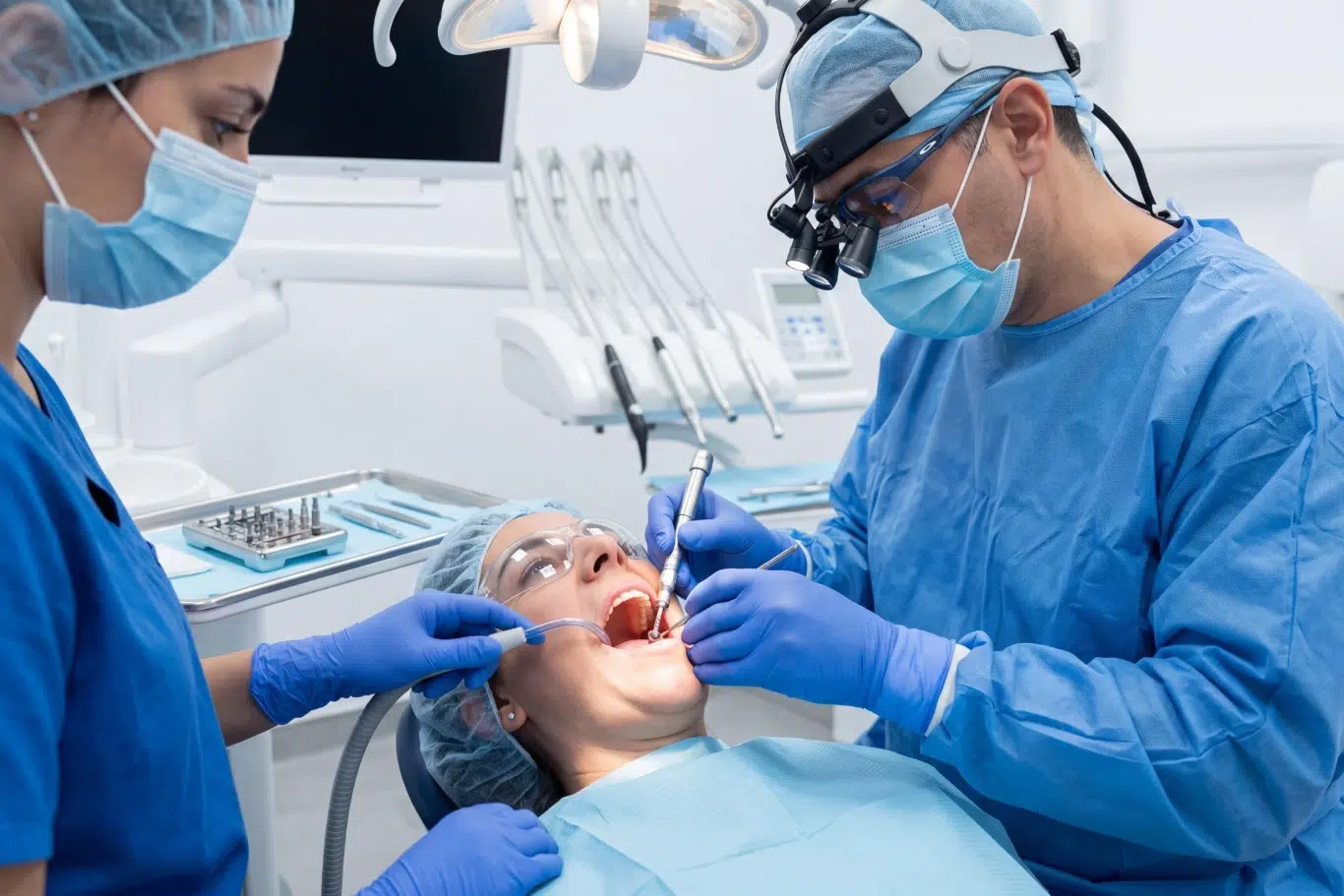
The extraction procedure is straightforward and efficient. A local anesthetic is used to numb the area, and IV sedation may be used for more complex cases. Our wisdom tooth surgeon then carefully removes the tooth. Sometimes, a small incision may be needed to access an impacted wisdom tooth. The entire process is handled with precision and care to minimize discomfort.
IS WISDOM TOOTH EXTRACTION PAINFUL?
No. Your oral surgeon will numb the area before beginning and will perform the extraction while you are under appropriate anesthesia (i.e., sedation or “asleep”). This maximizes patient comfort. It is not uncommon for patients to feel as if no time has passed from the beginning to the end of the procedure.
Afterward, some patients may experience mild discomfort, typically for only two or three days. Your surgeon may prescribe medication to manage any pain.
Dr. Brock was amazing! I was so nervous about getting my wisdom teeth removed, but he made the process super easy and comforted me before the surgery. I would recommend Dr. Brock 100%
-Julian Z.
Dr. Brock was amazing! I was so nervous about getting my wisdom teeth removed, but he made the process super easy and comforted me prior to the surgery. I would recommend Dr. Brock 100%
-Julian Z.
RECOVERY TIMELINE: GETTING BACK TO YOUR ROUTINE
After your wisdom tooth extraction, follow the post-operative instructions provided by our team. Recovery time can vary, but most patients feel better within a few days. We are available to answer any questions you may have during this period. For a comprehensive guide, please refer to our wisdom tooth aftercare guide.
Here are some wisdom tooth recovery tips to observe:
- Bleeding control: You will be given gauze to bite on to help control any bleeding. Change the gauze every 30-45 minutes.
- Pain management: Use any prescribed or over-the-counter pain medication as directed.
- Swelling reduction: Apply a cold compress to the outside of your cheek for the first 24-48 hours.
- Diet: Stick to soft foods like soups and yogurt for the first few days and avoid using a straw.
- Hygiene: Gently rinse your mouth with a saltwater solution starting the day after the surgery. Avoid brushing the surgical area for the first 24 hours.
YOUR WISDOM TOOTH RECOVERY: DAY BY DAY
Day 1: Some bleeding, swelling, and soreness are expected. Use gauze as directed, apply a cold compress to the outside of your cheek, take medications as instructed, and stick to soft foods.
Days 2–3: Swelling and jaw soreness may still be noticeable. Continue following your aftercare instructions, eat soft foods, and practice gentle oral hygiene as directed.
Days 4–7: Discomfort and swelling should gradually improve. You can begin returning to your usual routine as you feel comfortable while continuing to follow your surgeon’s instructions.
After the first week: Healing continues, particularly after a complex or impacted extraction. Contact your oral surgeon if pain, swelling, or other symptoms worsen rather than gradually improving.
WHAT SHOULD I EXPECT AFTER HAVING MY WISDOM TEETH REMOVED?
Patients whose wisdom teeth were impacted or were otherwise causing pain can expect to feel much better as the surgical area heals now that the source of the pain is gone. Your oral surgeon will review what to expect after your procedure. In general, you will notice the missing molar (if it was fully erupted), but please try to leave the area alone.
Depending on the procedure, you may feel stitches, but these will dissolve in a few days. You may experience some soreness in the jaw or gums, but it should ease within the next day or so. You will also need to watch what you eat and drink (stay away from hard and/or acidic foods). Again, your oral surgeon will provide you with a complete list of do’s and don’ts.
WHAT CAN I EAT AFTER HAVING MY WISDOM TEETH REMOVED?
You may feel some soreness in your jaw and the extraction area, so avoid foods that require chewing pressure (e.g., steak) or opening your mouth wide (e.g., corn on the cob). You’ll also want to avoid spicy or acidic foods (including orange juice and the like). Stick to soft foods like mashed potatoes, broths, and ice cream, among others.
After you’ve eaten, flush the surgical area with warm water to ensure no food particles are caught where your wisdom teeth used to be. Your oral surgeon will provide you with a detailed list of dos and don’ts regarding food and a tool you use to flush the gum area.
BENEFITS OF WISDOM TEETH REMOVAL
Choosing to have your wisdom teeth removed offers several significant benefits for your long-term oral health. These benefits include:
- Pain relief: Removing impacted wisdom teeth eliminates the pain, swelling, and discomfort they can cause.
- Damage prevention: Extraction prevents damage to adjacent teeth and the surrounding bone structures.
- Crowding prevention: Early removal can prevent wisdom teeth from causing other teeth to shift, which may require orthodontic treatment.
- Reduced risk of infection: Removing them eliminates the risk of developing a severe infection, such as pericoronitis.
COSTS, INSURANCE & FINANCING
We believe that access to high-quality care should be as easy as possible. The cost of a wisdom tooth extraction depends on the number of teeth being removed and the complexity of your case.
Insurance coverage can vary based on your plan and individual circumstances. We work with many insurance providers and will help you understand your benefits. We also offer insurance checks and financing options to make your treatment affordable.
Our team can answer your questions and help you explore your payment options.
WISDOM TEETH REMOVAL FREQUENTLY ASKED QUESTIONS
DO I NEED MY WISDOM TEETH?
Technically, no, you do not need your wisdom teeth. Your teeth will function fine, as designed, without wisdom teeth. As the last teeth to erupt, if they align properly and your gum tissue is healthy, you may not need to have wisdom teeth removed. However, even for the lucky few whose wisdom teeth appear aligned and function properly, they are still prone to disease and should be examined annually.
WHEN SHOULD I HAVE WISDOM TEETH EXTRACTED?
It is best to remove wisdom teeth when the patient is young, generally between 12 and 17 years old, before the roots have fully formed. This makes extraction easier, as there is a lower chance of damaging the nerve or surrounding area. Your dentist can recommend when to have the procedure.
WHAT HAPPENS IF MY WISDOM TEETH ARE IMPACTED?
An impacted wisdom tooth may be trapped beneath the gum or positioned against another tooth because there is not enough room for it to erupt normally. Your oral surgeon can use digital X-rays and 3D imaging to evaluate its position and determine whether removal is recommended.
CAN AN IMPACTED WISDOM TOOTH CAUSE AN INFECTION?
Yes, an impacted wisdom tooth can contribute to infection when bacteria become trapped around the tooth and surrounding gum tissue. An oral surgeon should evaluate pain, swelling, bad taste, or other concerning symptoms.
DO I HAVE TO HAVE EXTRACTIONS DONE AT A HOSPITAL?
Typically, the oral surgeons at COFS perform wisdom tooth extractions (a type of oral surgery) right here in the COFS office. Our surgeons are highly trained in oral surgery and care, as well as the administration of anesthesia, to ensure your procedure is painless, safe, and comfortable.
Expect the procedure to take about one hour, and you will need someone to drive you home afterward. You will get a better idea of how long your procedure may take following your consultation with an oral surgeon.
WHEN CAN I RETURN TO SCHOOL OR WORK AFTER WISDOM TEETH REMOVAL?
Many patients need time to rest after surgery, particularly during the first day when swelling and soreness may be more noticeable. Your recovery depends on the complexity of your extraction and how you feel, so your oral surgeon can provide guidance based on your procedure.
CAN I DRIVE HOME AFTER MY WISDOM TOOTH SURGERY?
If you receive IV sedation, you will not be able to drive home. Please arrange for a friend or family member to take you home from the appointment. If you only receive local anesthetic, you may be able to drive yourself; however, we recommend having someone accompany you for your comfort.
WHAT OTHER PROCEDURES CAN BE COMBINED WITH WISDOM TOOTH EXTRACTION?
Wisdom tooth extraction is typically a standalone procedure. However, for patients who may need to prepare for future restorative work, procedures such as a dental bone graft can sometimes be performed simultaneously. This is always a case-by-case consideration.
WHY CHOOSE THE CENTER FOR ORAL AND FACIAL SURGERY
At The Center for Oral & Facial Surgery, you are under the care of a highly qualified team of oral surgeons, including Dr. Justin R. Brock and Dr. Christopher D. Morris. With decades of combined experience, our doctors use modern technology to ensure thorough diagnostics and safe outcomes. From your initial consultation to your final check-up, our team is dedicated to providing compassionate, effective care.
Our practice also offers various services for patients who require options after tooth loss, including dental implants and bone grafting for oral surgery.
Meet the Experts Behind The Center for Oral & Facial Surgery
Dr. Justin R. Brock
Justin R. Brock, DDS, MD, brings over 15 years of experience in oral and maxillofacial surgery, with a focus on dental implants, bone grafting, and advanced jaw reconstruction. He uses Cone Beam CT imaging and digital scanning to plan each procedure with expertise.
Dr. Christopher D. Morris
Christopher D. Morris, DDS, MD, FACS, is a Fellow of the American College of Surgeons with published peer-reviewed research on facial anatomy and jaw reconstruction. He is known for restoring both the function and aesthetics of the mouth and face.
Dr. Matthew Zhang
Matthew Zhang, DDS, is an oral and maxillofacial surgeon with expertise in dental implants, wisdom tooth removal, bone grafting, jaw reconstruction, and management of oral pathology. He is committed to providing safe, compassionate, evidence-based care.
READY FOR RELIEF?
Don’t let wisdom tooth pain disrupt your life. The Center for Oral & Facial Surgery team is here to help you find relief and improve your oral health. To learn more about your options or to get started, you can schedule a wisdom tooth evaluation in Katy. Our office is easily accessible for patients in Fulshear and Richmond, TX. Please call 281-392-1130 or fill out the online form to book an appointment for your wisdom tooth pain relief.
Related Services
Oral and maxillofacial surgery is the specialty of dentistry that includes the diagnosis, surgical, and adjunctive treatment of diseases, injuries, and defects involving both the functional and esthetic aspects of the hard and soft tissues of the oral and maxillofacial region.
This comprehensive field of care also includes common procedures such as wisdom tooth extractions and dental implant placement, which help restore function, health, and aesthetics to the smile.