Jaw misalignment can affect how you chew, speak, breathe, and function each day. At The Center for Oral & Facial Surgery in Katy, TX, corrective jaw surgery is performed to address underlying skeletal issues that braces alone cannot fix, helping improve bite alignment, airway support, and long-term oral health through precise surgical care.
About Jaw Surgery
Orthognathic surgery (jaw surgery) is needed when jaws don’t meet correctly and/or teeth don’t seem to fit with the jaws. Teeth are straightened with orthodontics, and corrective jaw surgery repositions a misaligned jaw. This not only improves facial appearance but also ensures that teeth meet correctly and function properly. Orthognathic surgery addresses issues that orthodontics alone cannot fix, improving both function and facial balance.
Transform your health and confidence
Your surgeon aligns the jawbones using precise surgical techniques. The bones are then secured with small plates and screws. These biocompatible materials remain in place permanently but rarely cause discomfort.
This procedure goes beyond cosmetic improvement. It resolves functional problems that affect your daily life, from chewing difficulties to sleep-related breathing disorders.
Who Needs Orthognathic Surgery?
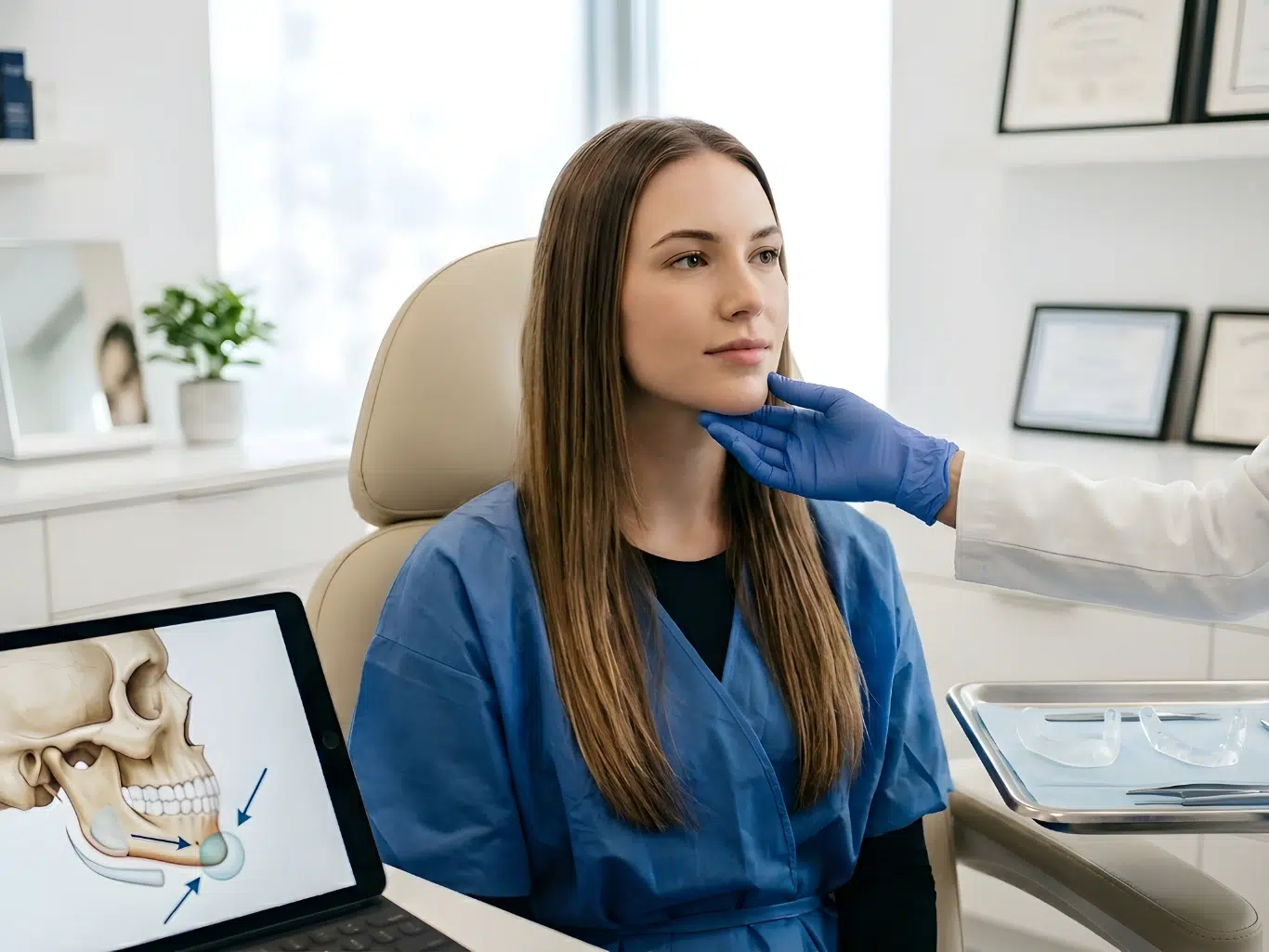
People who can benefit from orthognathic surgery include those with an improper bite or misaligned jaws. Jaw growth is a gradual process, and in some instances, the upper and lower jaws may grow at different rates. The result can be a host of problems affecting chewing function, speech, long-term oral health, and appearance.
Injury to the jaw and congenital disabilities can also affect jaw alignment. Orthodontics alone can correct bite problems when only the teeth are involved. Orthognathic surgery may be required to reposition the jaws.
Difficulty in the following areas should be evaluated:
- Difficulty biting, chewing, or swallowing food
- Chronic jaw or temporomandibular joint (TMJ) pain
- Excessive wear on your teeth from improper bite alignment
- Sleep apnea or breathing difficulties during sleep
- Facial imbalance or asymmetry affecting appearance
- A protruding or receding jaw that doesn’t respond to orthodontics alone
- An open bite, where teeth don’t meet when the mouth closes
- Congenital disabilities or injuries that altered the jaw structure
Any of these symptoms can exist at birth, be acquired after birth as a result of hereditary or environmental influences, or as a result of trauma to the face.
Before any treatment begins, a consultation will be held to conduct a comprehensive examination and X-rays. During the pre-treatment consultation, feel free to ask any questions you have about your treatment. When you are fully informed about your care, you and your dental team can decide together whether to proceed with treatment.
The Procedure: Technology & Precision
Advanced 3D imaging technology allows our surgeons to plan every detail before surgery begins. This technology maps your facial structure and shows exactly how your jaw will be repositioned. The precision reduces surgical time and improves outcomes.
The procedure takes place in a hospital or surgical center under general anesthesia. Most incisions are made inside your mouth, leaving no visible scars on your face. Surgery duration varies from two to four hours, depending on complexity.
Our surgeon carefully separates the jawbone in planned locations. For upper jaw repositioning, cuts are made above the teeth and below the eye sockets. For lower-jaw surgery, incisions are made behind the molars and along the jawline inside the mouth. The surgeon then moves the bones into their new position according to the pre-surgical plan.
Small titanium plates and screws hold the bones in place while healing occurs. These fixation devices are biocompatible and typically remain in place permanently without complications. In some cases, bone may be added, removed, or reshaped to achieve optimal alignment. The incisions are closed with dissolvable sutures. This serves patients seeking corrective jaw surgery, providing expert care from experienced surgeons.
Recovering from Jaw Surgery (It’s Better Than You Think)
Modern techniques have made recovery more manageable than many patients expect. You’ll stay in the hospital for 1-2 nights and return to work within 2-3 weeks. Your jaw may be wired or banded temporarily while you follow a liquid and soft food diet for several weeks.
Swelling peaks around day three, then gradually decreases. Pain is typically well controlled with medication, with most patients reporting pressure rather than sharp pain.
Key aftercare tips for optimal recovery:
- Apply ice packs for the first 48 hours and sleep with your head elevated
- Progress from liquid to soft foods as directed by your surgeon
- Take all prescribed medications on schedule
- Avoid strenuous activity for at least six weeks
- Rinse gently with saltwater after meals and attend all follow-up appointments
The Life-Changing Benefits
Jaw alignment benefits extend far beyond appearance. Many patients experience dramatic improvements in their quality of life. Better breathing during sleep often eliminates snoring and sleep apnea symptoms.
Eating becomes easier and more enjoyable when your bite functions properly. Chronic headaches and jaw pain often disappear after recovery. Your teeth wear more evenly, protecting them for years to come.
Facial symmetry improves naturally as your jaws move into balanced positions. Speech may become clearer if misalignment previously affected pronunciation. The psychological benefits of improved function and appearance can be profound.
Cost of Jaw Surgery in Katy, TX
The cost varies depending on the complexity of your case. Most insurance plans cover orthognathic surgery when it addresses functional problems like sleep apnea or severe bite issues. We accept Delta Dental, Cigna, United Healthcare, Blue Cross Blue Shield, and most major insurance plans.
Our team verifies your benefits before treatment. For out-of-pocket expenses, we offer financing through Cherry with flexible payment plans. You’ll receive a detailed cost estimate during your consultation.
I was shocked at how smooth the entire process was! The recovery was much easier than expected. The staff was very helpful, responsive and kind! Great experience!
-Christa D
Why Choose The Center for Oral & Facial Surgery in Katy, TX
The Center for Oral & Facial Surgery, serving Katy, Fulshear, and Richmond, TX, provides access to two board-certified oral and maxillofacial surgeons with exceptional training in complex jaw surgery.
Dr. Justin R. Brock has over 15 years of experience and holds DDS and MD degrees from Columbia University and UT Southwestern Medical School, respectively. His dual training provides comprehensive expertise in both dental and medical aspects of your care.
Dr. Christopher D. Morris is a Fellow of the American College of Surgeons who graduated first in his class from Loma Linda University. He completed six years of residency training and has published research on facial anatomy and maxillofacial trauma. He previously managed facial trauma at Level I Trauma Centers and ran a specialized clinic for TMJ disorders.
Both surgeons at our practice maintain hospital privileges at Memorial Hermann Katy Hospital and use advanced 3D imaging for surgical precision. Get to know our surgeons to learn more about their approach to care.
Meet the Experts Behind The Center for Oral & Facial Surgery
Dr. Justin R. Brock
Justin R. Brock, DDS, MD, brings over 15 years of experience in oral and maxillofacial surgery, with a focus on dental implants, bone grafting, and advanced jaw reconstruction. He uses Cone Beam CT imaging and digital scanning to plan each procedure with expertise.
Dr. Christopher D. Morris
Christopher D. Morris, DDS, MD, FACS, is a Fellow of the American College of Surgeons with published peer-reviewed research on facial anatomy and jaw reconstruction. He is known for restoring both the function and aesthetics of the mouth and face.
Dr. Matthew Zhang
Matthew Zhang, DDS, is an oral and maxillofacial surgeon with expertise in dental implants, wisdom tooth removal, bone grafting, jaw reconstruction, and management of oral pathology. He is committed to providing safe, compassionate, evidence-based care.
Frequently Asked Questions About Jaw Surgery
Will I have visible scars after jaw surgery?
Most incisions are made inside your mouth, so external scarring is extremely rare. Any small external incisions are placed in natural skin creases where they become nearly invisible over time.
How long until I see my final results?
Initial swelling decreases significantly within 3-4 weeks. However, subtle changes continue for several months as tissues settle. Most patients see their final facial contours around six months after surgery.
Can jaw surgery be combined with other procedures?
Yes, many patients combine orthognathic surgery with rhinoplasty or chin augmentation for comprehensive facial balance. Your surgeon will discuss which combination best addresses your needs during your consultation.
Will I need braces before or after surgery?
Most patients wear braces before surgery to align teeth within each jaw. Post-surgical orthodontics fine-tunes your bite after the bones have healed in their new positions. The entire treatment timeline typically spans 18-24 months.
What happens if I specifically need underbite correction surgery?
Underbite correction surgery involves repositioning your lower jaw backward or your upper jaw forward. The specific approach depends on which jaw causes the misalignment. This procedure effectively corrects the functional and aesthetic concerns associated with underbites.
How does jaw surgery treat sleep apnea?
Sleep apnea jaw surgery enlarges your airway by moving your jaw forward. This creates more space for air to flow during sleep, reducing or eliminating apnea episodes. Many patients can reduce or discontinue CPAP use after successful surgery.
For more information on dental implants please visit: MyOMS.org.
Schedule Your Jaw Surgery Consultation in Katy, TX
If jaw alignment problems are affecting your comfort, bite, or breathing, an expert evaluation is essential. Consult our experts at The Center for Oral & Facial Surgery in Katy, TX, to discuss how corrective jaw surgery can help you. Contact us today to request an appointment.
Related Services
Oral and maxillofacial surgery is the specialty of dentistry that includes the diagnosis, surgical, and adjunctive treatment of diseases, injuries, and defects involving both the functional and esthetic aspects of the hard and soft tissues of the oral and maxillofacial region.
This comprehensive field of care also includes common procedures such as wisdom tooth extractions and dental implant placement, which help restore function, health, and aesthetics to the smile.